Sankofa

From a page in an old hand to a line you can cite.

Sankofa transcribes handwritten archival documents. A vision model reads each folio line by line, and the text is corrected beside the scan.

churro · TEI XML · Chicago notes · Zotero

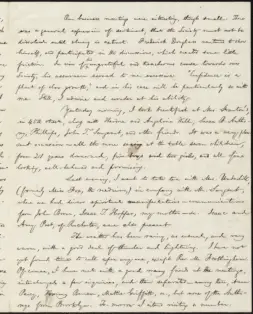
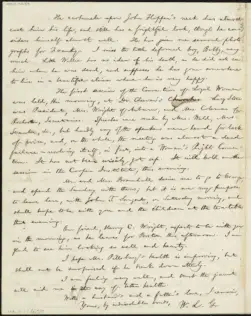
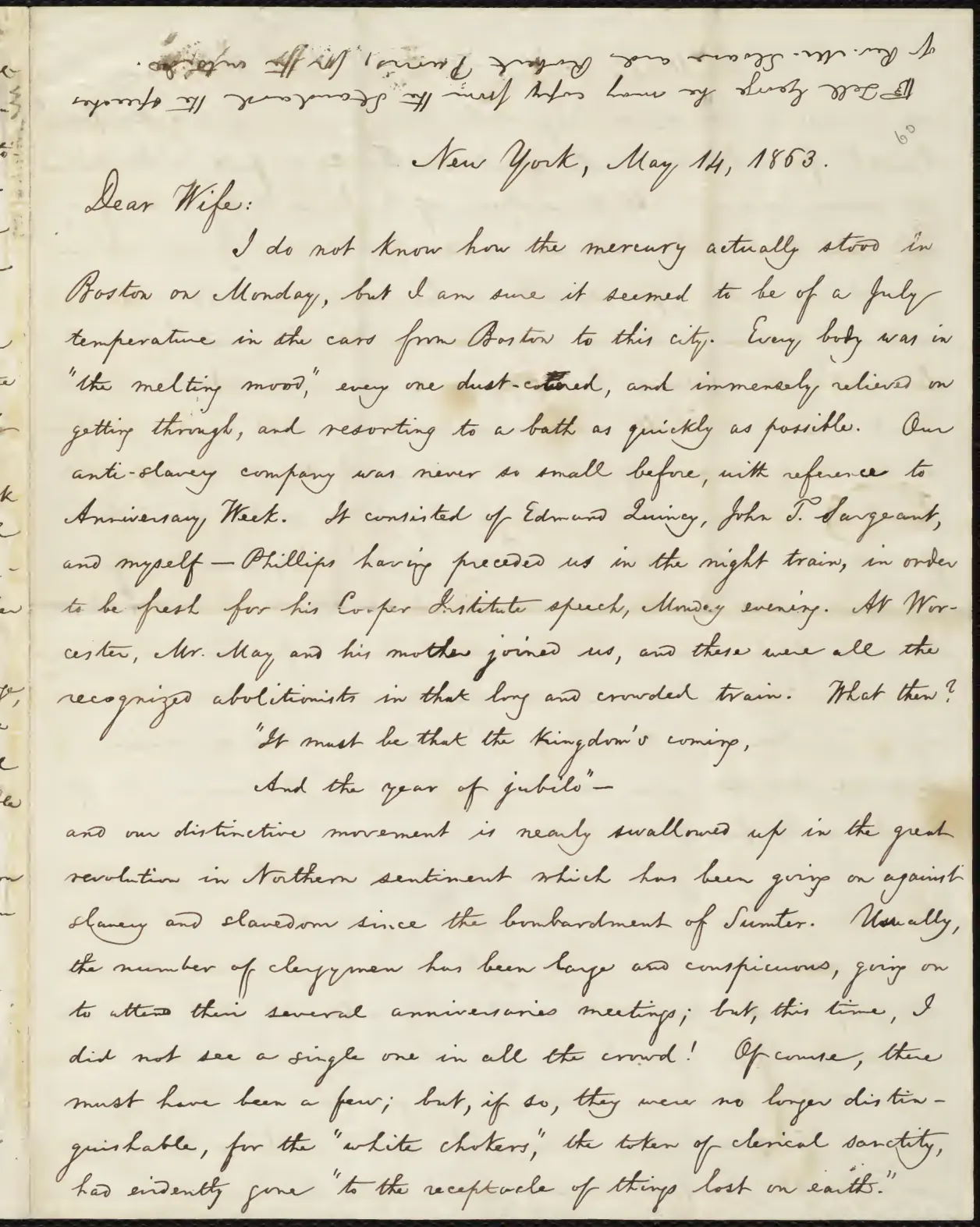
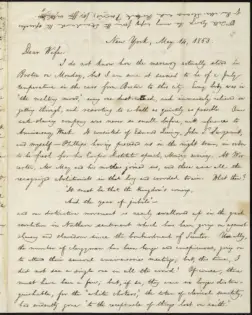
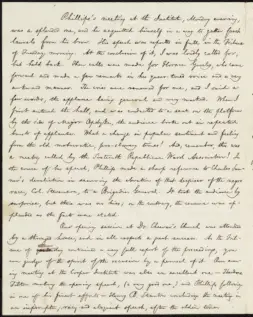
The folio: William Lloyd Garrison to his wife, New York, May 14, 1863. The scan, and churro's reading of it, are the real ones.
01 · in

Bring the folios in

Add photos, scans and PDFs from your phone or computer, or pull them from your Zotero library. A PDF is split into its folios and a photo is turned the right way up. If the connection drops during a large upload, it picks up where it stopped. Sankofa only reads from your Zotero library and never changes it.

garrison-dear-wife.pdfUploaded · 4 pages added553 KB of 553 KB
  1. p. 1Queued
  2. p. 2Untranscribed
  3. p. 3Untranscribed
  4. p. 4Untranscribed

02 · read and correct

Read by churro, corrected by hand

churro, an open vision model trained on historical documents, returns the folio with an initial line-by-line transcription. These lines are its first attempt at reading the folio, with the words it got wrong struck and replaced by hand, beside the scan. The folio is marked ready when you finalize the revisions.

  1. 3I do not know how the mercury actually stood in

  2. 4Boston on Monday, but I am sure it seemed to be of a sultryJuly

  3. 5temperature in the cars from Boston to this city. Every body was in

  4. 6"the melting mood," every one dust-covered, and immensely relieved on

  5. 7getting through, and resorting to a bath as quickly as possible. Our

  6. 8anti-slavery company was never so small before, with reference to

  7. 9Anniversary Week. It consisted of Edmund Luiney,Quincy, John T. Sergeant,Sargent,

03 · the lab

The machine is measured

Different models and instructions can read the same folios. Each reading is scored by how many characters and words differ from your corrected text, so the yardstick is your own reading. Where several readings disagree, the words are marked, more strongly the more they scatter. The panel below works: try it.

Runs

most agreesplitscattered

anti-slavery company was never so small before, with reference to Anniversary Week. It consisted of Edmund Quincy, John T. Sargent, and myself -- Phillips having preceded us in the night train, in order

The 3 runs disagree at 1 word. 4 more where one run stands alone are not marked.

  1. l. 2Quincy,Luiney, ×1 · Quiney, ×1 · Lumey, ×1

04 · ask the archive

Answers that point back at the folio

Sankofa builds a searchable index of the people, places, organizations and dates it finds across all your documents, and each one enters only once you confirm it. Search also finds a word under its other spellings. Ask a question and the answer comes in quotations, each checked against the passage it cites, and each citation opens the scan at the quoted lines.

05 · out

And out again

A document leaves with its citation already written. Corrected folios can also become a training dataset, so a model can learn to read this handwriting better.

  • Wordone file per document, the citation as its first footnote
  • TEI XMLfor digital editions: P5 with a header, and a marked break at each page and line
  • Markdown and plain textdiplomatic, with the marks, or a reading text without them
  • CitationsChicago notes and a bibliography, RIS, BibTeX and CSL-JSON
  • Fine-tune datasetcorrected pages and their images, split for training a model
Chicago · Note
1. William Lloyd Garrison to Helen E. Garrison, May 14, 1863, Anti-Slavery Collection, Boston Public Library, Boston, MA.
Chicago · Later note
2. Garrison to Garrison, May 14, 1863.
Chicago · Bibliography
Garrison, William Lloyd. Letter to Helen E. Garrison, May 14, 1863. Anti-Slavery Collection, Boston Public Library, Boston, MA.

what holds at every step

Kept as written.

A transcription is verbatim. The long s stays a long s, a struck word stays struck, and a word written above the line stays above it. Search folds spellings together without changing a letter of the text.

Nothing is written over. Every machine reading is kept as it came back, every correction alongside the version it replaced, and every answer with the passages it read.

Recᵈ yʳ letter of the 3ᵈ inst. ~~on Monday~~ ^yesterday^ & will ſend the ℔ of [illegible] by Mr. [May?] &c

an example line, as it is stored

~~word~~
struck through in the original
^word^
written above the line
[illegible]
a word nobody can read
[word?]
a doubtful reading
ſ yʳ &c ℔
kept as written, never modernised

questions

Before you ask.

Who can use it?

Sankofa holds one researcher’s archive and has a single account. There is no sign-up.

Where do the documents go?

Nowhere outside the project. The scans are stored privately, and the models that read them run on hardware the project controls. No third-party AI service sees a folio or a question.

What does it cost?

Nothing. The models are open and run on that same hardware, so no folio and no question is billed by anyone.

What happens when the model is off?

Nothing fails. Transcriptions wait in the queue, say that they are waiting, and start when the model answers again.

It is not wrong to go back for what you forgot.

Sankofa is a Twi word for going back to fetch something. Its two Adinkra forms are this bird, looking back over its shoulder with an egg on its back, and a heart with curled ends.

Sign in